

Five years ago I posted a blog piece entitled ‘Home thoughts from abroad’. At the time I was confined to an AirBnB apartment in the city of Logroño, on the Camino de Santiago in Spain. I was confined because it was the first Covid lockdown of 2020, I was waiting to continue my camino and, with little else to do, I was reflecting on what the word ‘home’ means to us, with its inherent sense of safety, security, belonging and shared love. I thought of ‘home’ then, as the UK, as it was the place where most of my family members and long-term friends lived…but now, I think of home as Spain and Logroño, the city where I’ve chosen to settle and live…thanks to the Camino, and to God’s divine providence working in the inexplicable way that it does.
Over the recent Christmas period I returned to the UK briefly, to visit as many of my family members and friends as was possible, driving up and down the country several times, and being only mildly affected by both the Norovirus outbreak (that was cutting a swathe through Christmas celebrations far and wide) and the sudden arrival of snow and wintery conditions on my final day of travel. Several pre-planned meetings had to be changed, some friends I’d hoped to see had to be missed, but all was well that ended well, just like any metaphorical camino.

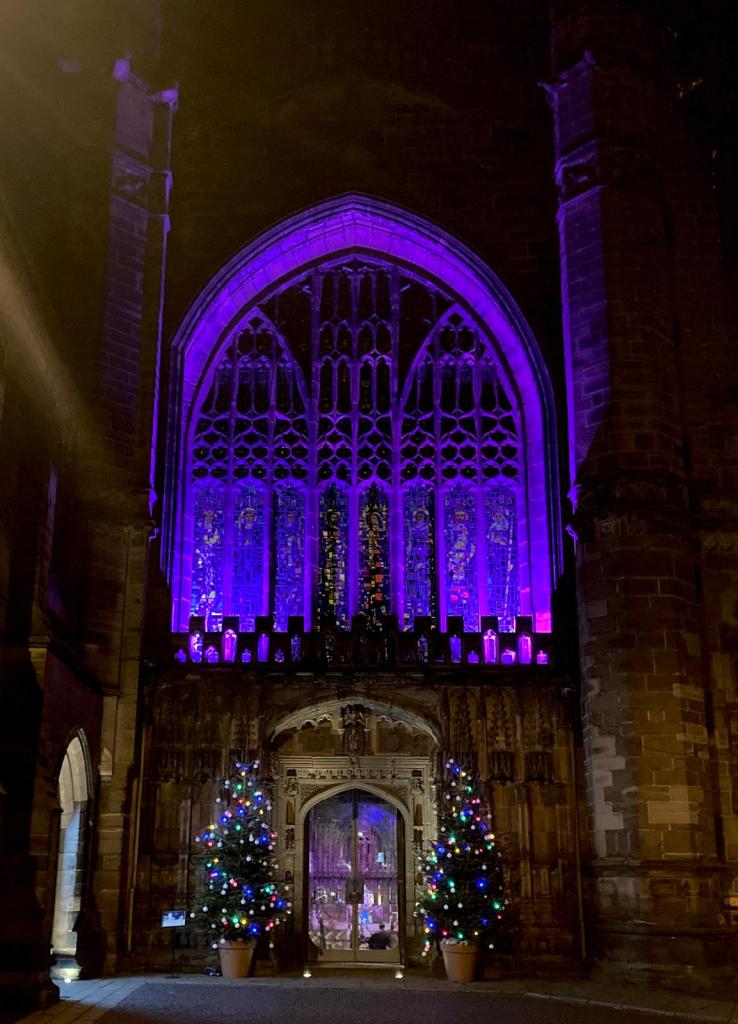
On one of the days while I was there, I met up with a friend in the ancient Roman city of Chester. I hadn’t intended to visit the city’s cathedral, as I’d already visited it several times, years before. But my satnav led me to a street I hadn’t expected to be on and to a carpark that I wasn’t planning to use, so I went with the flow and, walking from there to our agreed meeting point, I found myself passing the cathedral’s impressive frontage once again. As I stopped to admire it, my eye was caught by something unexpected and quite beautiful…a scallop shell and cross, sculptured in bronze, and set within a large portico of glass, that had a labyrinth etched into it. It was at the recently remodelled Western door to the cathedral, where the main entrance is located
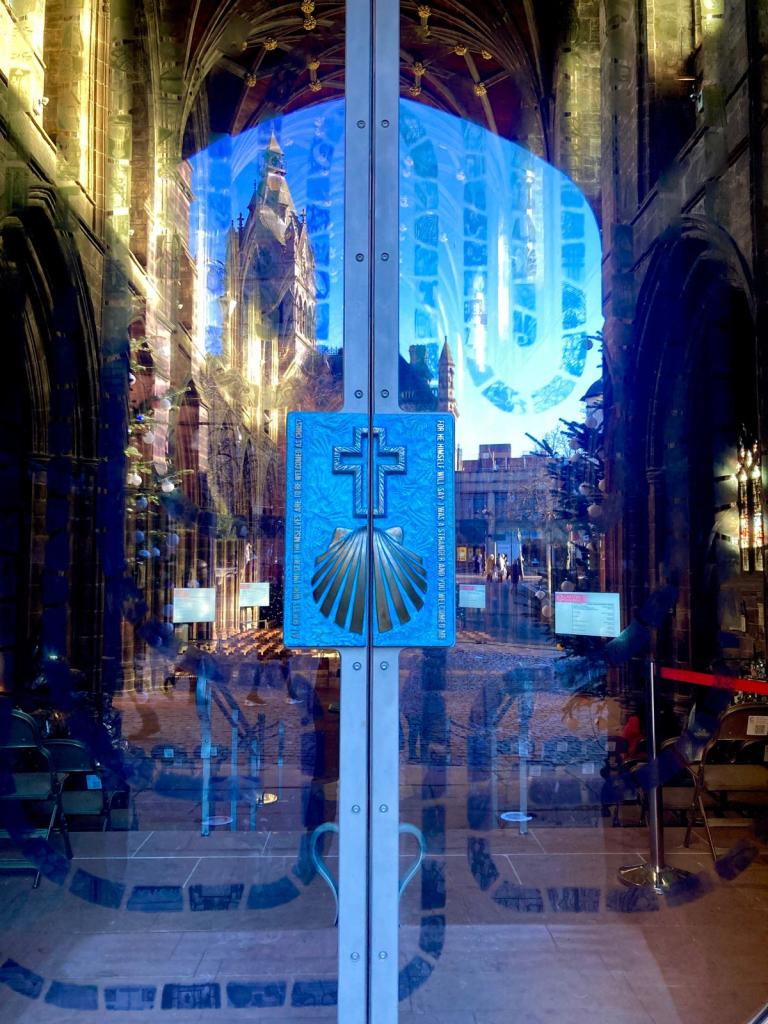
I moved closer to read the inscription on the sculpture and to photograph it, and I later discovered that it’s called ‘The Pilgrim Porch’ and was inaugarated in 2022 as part of the Queen’s Platinum Jubilee. The glass portico enables anyone passing the cathedral to look through it and to see the beautiful interior without actually having to enter, and (the artist’s website tells us) it is part of a larger initiative by the cathedral to increase inclusivity and visibility generally.
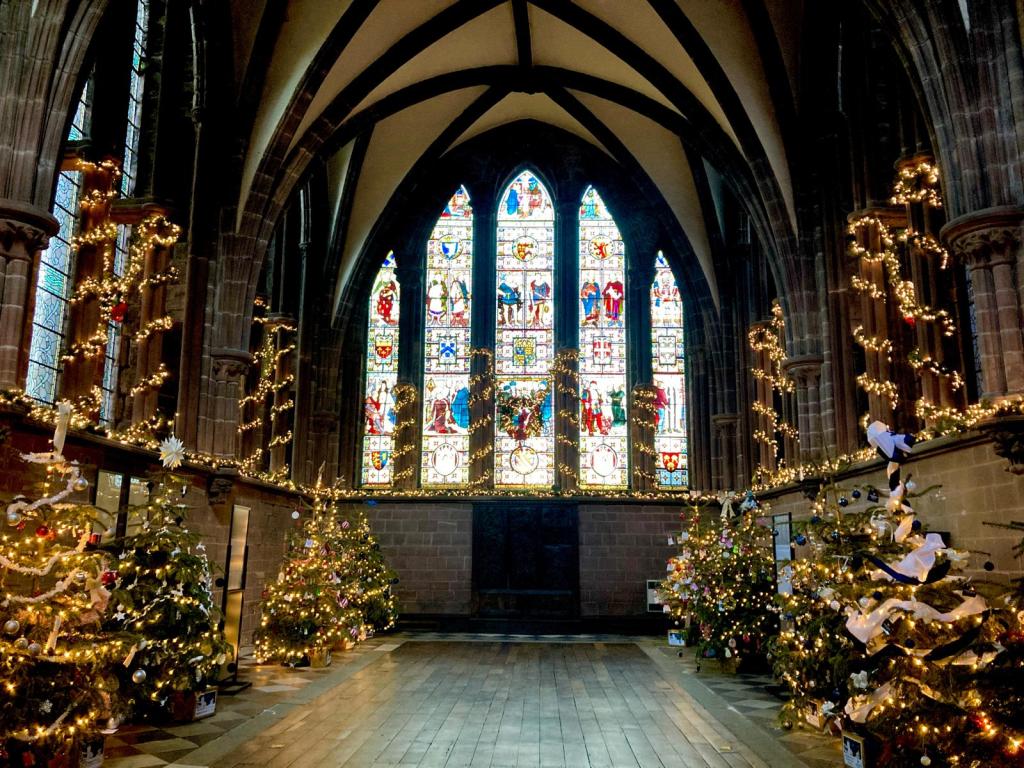
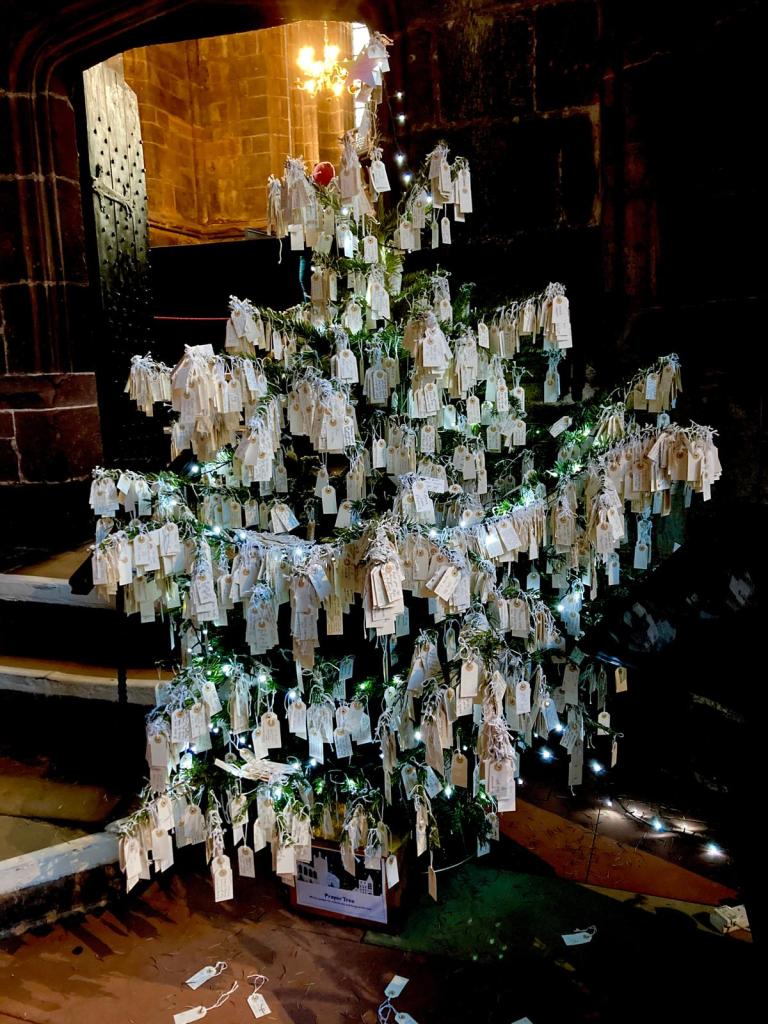
Later, I suggested to my friend that we return to visit the cathedral, which we did, and discovered more beautiful things inside. The building was filled with live Christmas trees, lining its main interior and all along its passages; each was lit with tiny lights; and many were acting as ‘prayer trees’ (with visitors invited to leave their individual petitions, with tags and pens provided). Every one was filled to capacity with prayers and, although I only read a fraction, the theme was all the same…no requests for anything physical or material…all asking for love, peace, healing and unity, and all requests being made on behalf of someone else.
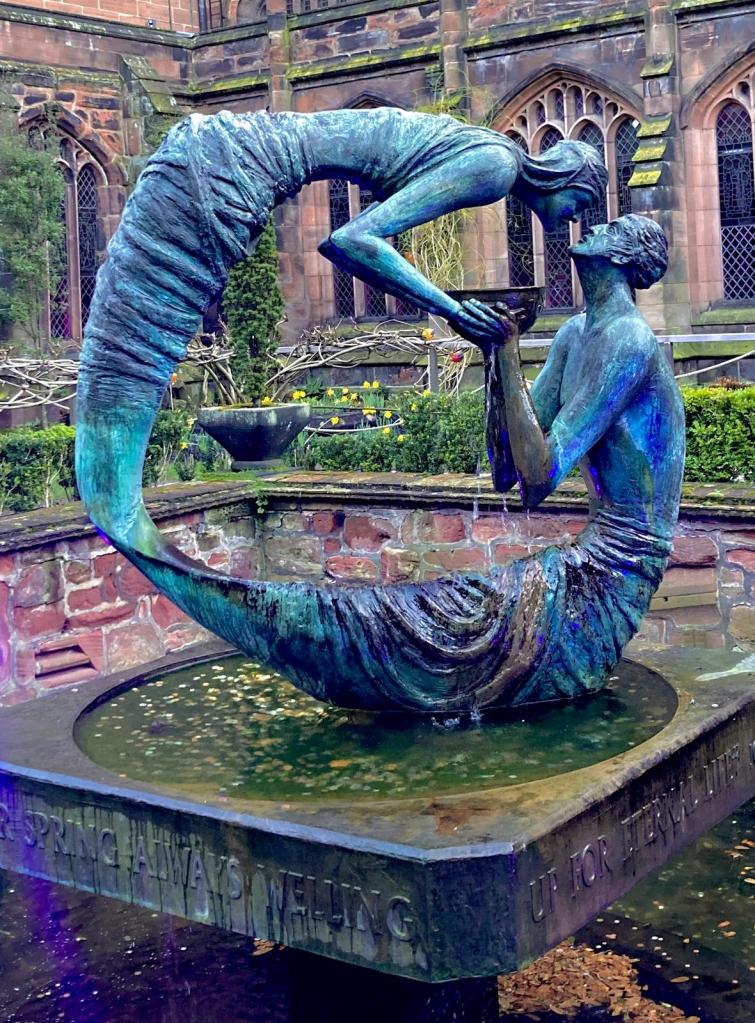
Later, we moved on to the cloister and I saw again a sculpture that had so captivated me years before, although I didn’t remember that Chester was the place where I’d first seen it. It’s called ‘ Water of Life’ and depicts the scene described in the Bible where Jesus asks a woman from Samaria to give him water, when they meet at a well. Symbolically (and traditionally taught within the church) the meeting shows the power of Jesus’ simple gesture in restoring a sense of personal worth and value to a woman that custom and circumstance at the time would have dictated he should ignore. (The Jews and Samaritans were enemies, women were universally regarded as inferior to men, and this particular woman was living with a man she was not married to, after being married several times before). And yet…Jesus ignores this convention and asks for her help in sharing the water she has drawn from the well and, perhaps even more surprisingly, the woman shows that she is not afraid to question him about his request, or to speak openly and truthfully about her circumstances.

What is striking about the sculpture is the visual sense of intimacy that it depicts, and the profound connection that results from the way in which both Jesus and the woman choose to relate to each other. It is not just a representation of “Jesus healing another person”, but rather it shows the circular giving and receiving of honesty and respect and how this way of being has the power to become the Water of Life spiritually, as the artist explains:
My intentions with the piece were to show an intensity of relationship, in such, at that very moment, there was no one else existing in the world. In its sculptural form, I felt Christ needed to be set below this remarkable woman, while at the same time revealing how her life was springing out from his. I also wanted to show some ambiguity as to who was giving the water, and importantly for the water to be overflowing. It was the tenderness of Christ that touched me personally, her shame was to be taken away and not paraded across her community, with whom she became wonderfully reconciled.“
It reminded me again what experience and pilgrimage has taught me: that those who feel little true respect for themselves, tend to have difficulty showing respect to those around them, while those who have come to understand and feel their true worth, can recognise and nurture that sense of inherent self-worth in others. They are the ones who feel ‘at home’ in their own skin and with the entirety of who they are, knowing that they are loved by God in that entirety. Because that knowledge and acceptance, that simple ‘way of being’, becomes the healing well-spring and self-replenishing water of life, with its power to overflow into the lives of others.

 La Casa de Paz
Thank you for the story and photo of the water of life, it helped me deal with a challenging family situation.
LikeLiked by 1 person
You’re welcome Krista, I’m very glad that it helped. Sending you love x
LikeLike