
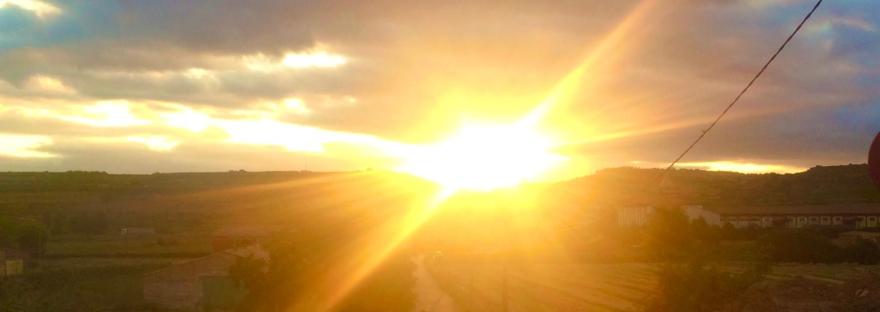
Last week I visited Poland for the first time. I went there to talk at a travel festival…

…and this was my presentation:

“I first met Tomasz (who’s organised this festival) 10 years ago on the Camino de Santiago in Spain. We met in a misty wood the evening before we both arrived in Santiago. I’d missed the village where I was planning to spend the night, because I was talking to someone I met on the Way, and Tomasz was going further, because he wanted to spend his last night in the only Polish Albergue on the Camino at that time. So we talked for a bit, then said our goodbyes and we went our separate ways. A few days later, we met again by coincidence in Santiago and we exchanged contact details but we’ve actually had little direct contact since then, although Tomasz followed what I did during the next 10 years on Facebook. In January of this year, I decided to leave Facebook and when Tomasz heard that, he asked me to come and talk at this year’s festival, to share a little of how I’ve lived my life since that first Camino…and of how I’ve found the courage to do it.
I don’t think what I’ve done is particularly courageous. In fact, I feel a little out of my league, compared to the other speakers here. But I can see that what I’ve done is unusual, in the way that I changed my life completely, at quite a late age. And maybe sharing my story might help others, who believe they can’t do something, find the courage to challenge that belief, and just give it a try. I think that’s the greatest lesson that the last 10 years have taught me: how much we can learn from each other’s example. Because, despite all our differences, I’ve learned that we’re actually much more similar than we think. Sometimes we can grow up believing we’re different. That maybe we’re the only ones who feel things in a particular way: an anger, or passion, a joy, or an anxiety, a loneliness or a longing. But the more I’ve challenged that belief myself, just by talking honestly with others about my life and my feelings, the more I’ve learned that we’re not as different or as alone as, maybe, we sometimes think or feel we are.
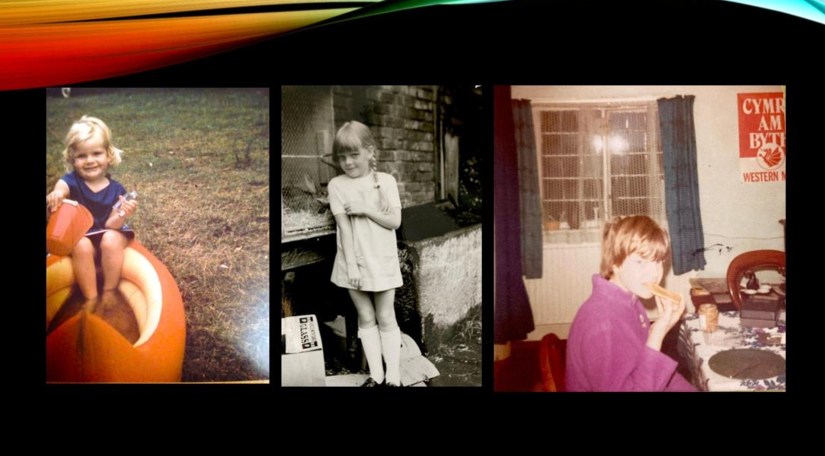
So, my personal story is that I spent the first 50 years of my life focusing on the ways that I believed I was different to other people…not the same. And I gradually became more and more insecure about that difference. I spent many years trying to understand it, and then learning how to change myself, to make myself less different. You see, as a little girl, like most young children I think, I lived very much in the imaginative side of my brain. Everything around me seemed incredible and exciting, and all the things I could imagine seemed incredible and exciting too. It was a way of being that I loved, but it also left me a bit disconnected from the people around me, and I gradually learned ‘that wasn’t how the world wanted me to be’. So, from the age of about seven, I began to pay more attention to what people around me were saying about how I should be, and how I should behave, and that changed me into a quite shy and anxious child. I became an introvert, trying to make sense of it all, instead of the extrovert I started out as, just living and enjoying it all. And because of that, I grew up to be quite a solitary and awkward teenager.
Then, as a young adult, I started work in the business world and I learned how to really use the logical side of my brain. I discovered that I was good at planning and organising things and that, when I did that – both at work and at home – I felt much less anxious, and the people around me seemed to like me being that way too. They liked that I was reliable, and organised, and hard-working and I did well at work, because it gradually became my way-of-being and, then, my way-of-life.

I worked hard, I studied in my spare time and I climbed the career ladder. I met my partner, I got married, I set up my own small business and, on the outside, I lived a successful, comfortable and very conventional life. But on the inside, this part of me (the imaginative part) never really went away. It kept dreaming, and wondering, and asking “Is this it? Isn’t there more to life than this?” But, by then, the rational side of my brain had grown more dominant and it would answer “Why do you keep saying that?! Look at everything we’ve achieved, everything we have. Be grateful, be happy!” But because, deep down, I knew that I wasn’t happy, my feelings of anxiety gradually started to come back and I began to experience periods of depression, that would last until the rational part of me could convince the rest of me to just get on with the good life that I had.
I lived in that repetitive cycle for many years…until, one day, something amazing happened, just a few weeks before my 50th birthday. I can’t really explain it, because I still don’t fully understand it, but it was like the two parts of my brain stopped fighting, came together and finally agreed “This is not how life is supposed to be…and it’s too mentally and emotionally exhausting continuing to try and live it this way.” The truth of that realisation felt so strong that it swept away all my anxiety, and I felt an immense sense of calm and clarity that I’d never felt before. On the strength of it – and because it felt so right – I stepped completely out of my comfort zone. I left the relationship that I’d been in for almost 30 years, the home I’d lived in for almost 25 years and the job that I’d been doing for almost 20 years. And I did it because I could suddenly see that if I went on living a life that felt like it had no real purpose, pretending to be someone that I knew I wasn’t, then I couldn’t really see any point in being alive. But I also felt, perhaps for the first time in my life, that there was something important inside me that wanted to live, and I wanted to find out what it was.
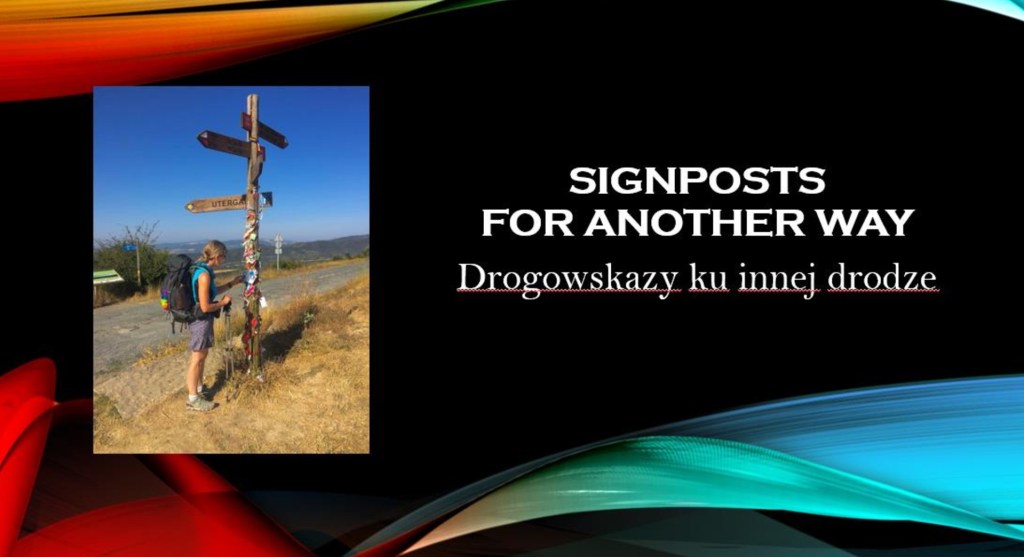
So I found a new place to live and I began thinking seriously about what job I could do that would feel more fulfilling. I’d been a Business Consultant before, and I knew I that I didn’t want to do a similar job again but, no matter how much I thought, no ideas came. So I decided to walk the Camino de Santiago for 2 weeks, to give myself some thinking time, and hoping that a change of scene would inspire me. I didn’t know much about the Camino at the time, but I wasn’t religious or particularly spiritual, so walking all the way to Santiago didn’t feel important to me…I wasn’t planning a pilgrimage, just a short walking holiday. So I bought a return flight ticket, booked my first two nights’ accommodation, and decided that I’d walk as far as I could in those two weeks, and leave everything else to chance.
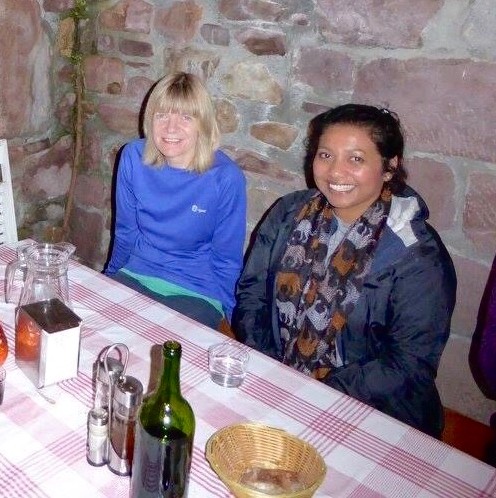
Looking back at this photo, of me on my first night on that Camino, always makes me smile. Because I can still remember how awkward and anxious I felt, and how little idea I had then of the impact that the Camino was going to have on me. You see I’ve remained an introvert by nature, and social situations had always left me feeling uncomfortable and out of place. And that was another reason that I thought the Camino would be good for me, I wanted to learn how to be more confident in meeting and mixing socially with people I didn’t know. And it worked! In fact, two weeks later, I tore up my return flight ticket and I threw it away. Because, by then, I knew that I had to walk to Santiago.

You see, in that short time, most of my self-limiting beliefs and the prejudices I had about other people, had been challenged. I discovered that when I had the courage to start conversations with random people, of all ages and nationalities, how positively they responded and how keen they were to talk. That encouraged me to adopt a more open and relaxed attitude generally and, despite the fact that the Camino was challenging for me, I also realised that I’d never felt so fully alive before, either physically or in the way that I was connecting with other people. Because, before the Camino, I’d believed there weren’t many people like me in the world, and the Camino showed me there are people like me all over the world…from all different countries and cultures, and of all ages.
People who wanted to have deeper conversations about the big questions of life, their dreams and what could be possible. People who weren’t afraid to speak honestly about very personal thoughts, feelings, experiences, and fears. I discovered that there are thousands of us… and I could see that something about the Camino was not only bringing us together, but it was helping us to connect in a way that felt really meaningful and inspiring. We were all walking together, through the same beautiful and constantly-changing landscape. We were all watching the sun rise and set each day, as we kept going in the same direction. And that not only filled me with a great sense of connection and peace, it made realise that something much bigger was happening than just a walking holiday. I began to understand what being a pilgrim is really all about, and that actually, I was one, after all.
When I finished the Camino, I could see that it had been like an intense version of life itself. It was unpredictable: the weather and the scenery changed all the time; there were beautiful sunny days and cold, windy and rainy days. I met incredibly kind and helpful people, usually, just when I needed help or encouragement. And I also met difficult, aggressive and confrontational people…but I learned that I could survive those encounters, and walk away from them a little wiser. I got ill, and then I recovered with rest, and I found my own walking pace and learned what happened when I tried to adopt someone else’s faster pace. My body and my mind didn’t like it. Most of all I learned how little I actually needed to live well; how simple it was to find joy in the simplest things; and how to be grateful for what I had and for what other people shared with me, day by day. In short, I learned how to trust what life sent me each day and to trust that I’d be able to cope with it.

After a while, I began to see it all as the ‘Spirit of Life’ itself, present in everything that was happening. In every encounter, no matter how small, it seemed to be flowing between us, encouraging us to be a certain way…more open, more relaxed, more curious about each other. And I saw how easily everything seemed to flow, when we were. When I eventually arrived in Santiago, I already knew that I didn’t want to change my job any more, I wanted to change the whole way I was living. I realised that what I’d experienced and felt as the ‘Spirit of Life’ as I walked, was linked in some important way to the sense of clarity that I’d felt before my 50th birthday. And I wanted to understand it better, to understand what it wanted from me, and to start building my new life around it. I began to think about all the money I was spending on rent and bills in the UK, and I saw that, if I continued to do that, I would just be sustaining a way of life I didn’t want to live anymore. All I wanted to do, at that moment, was to continue walking the Camino and to keep learning.
So, again, I trusted my intuition and I fully committed to what it was urging me to do. I went back to the UK and gave notice on the house I was renting; I sold or donated to charity virtually everything I owned (including my car); and I told my friends and family about the decision I’d made to start living differently. I was amazed to find that people were really supportive. I think they could see the positive impact the Camino had had on me and the new confidence it had given me, and they began to suggest things they’d heard about that could help me with my new way of life.
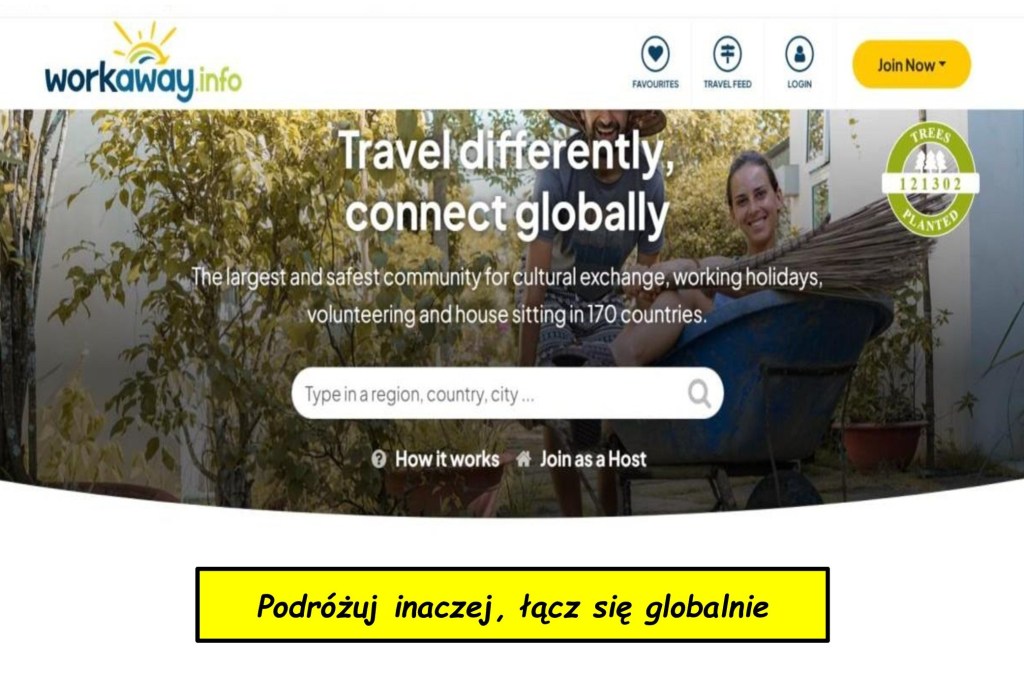
I learned about volunteer websites like ‘WorkAway.Info’; Trusted Housesitters ; and Vaughtown and, since then, I’ve found voluntary work through them all. If you’re not already familiar with the WorkAway.Info website, it’s a great place to find all kinds of volunteer work, all over the world.

Then, I flew to back to Spain and I walked the Via de la Plata, the 1,000km Camino from Seville in the South to Santiago in the North and that was 9 years ago. Since then, apart from two months when I worked in a restaurant/bar on the Camino, I haven’t worked in a paid job since. I’ve funded it by completely altering the way that I think, and the way that I live. I now recognise how unpredictable life is and so I don’t focus on what might be in the future, but rather, I focus on what actually is in the here and now. Because the Camino has taught me that there’s always a way to deal with challenges when they arise. I don’t focus on accumulating money or material things anymore and I don’t plan more than a few months ahead. I just use what I have as wisely as I can, and I try to always be grateful for it. I’ve done a lot of voluntary work and I’ve spent time in Nepal, in Israel, and in the Canary Islands. I’ve walked 10 more entire Caminos to Santiago, as well as many smaller ones, and at the moment I live full-time in a city in the North of Spain, on the Camino itself.
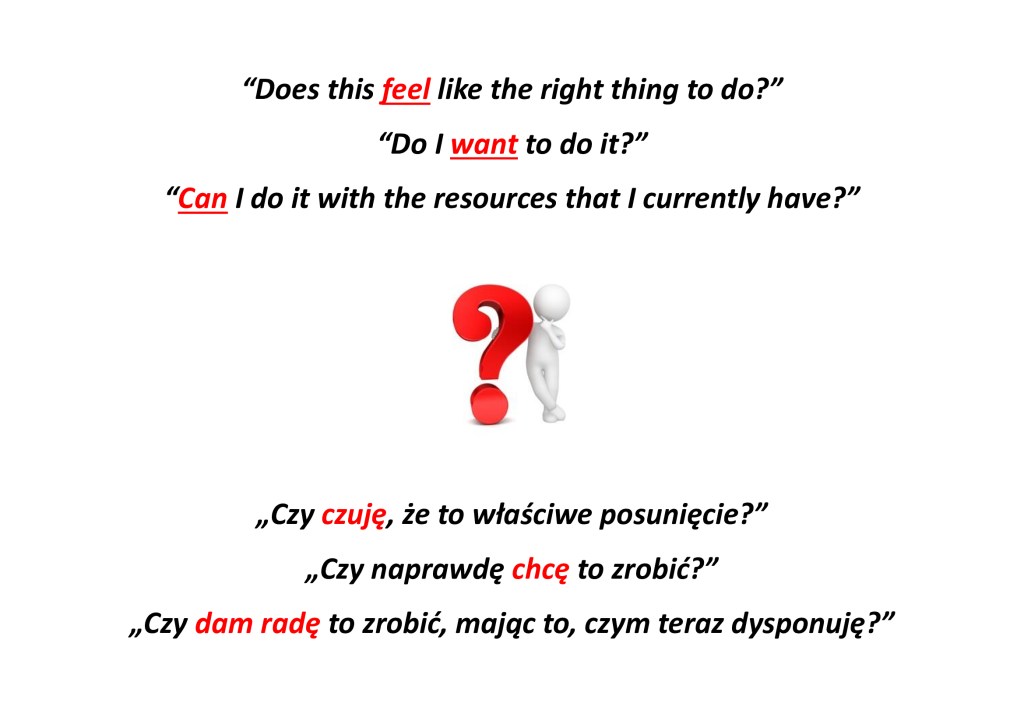
And how did it all happen? Well, when each opportunity presented itself, I asked myself 3 questions: “Does this feel like the right thing to do? Do I really want to do it? Can I do it with the money I currently have?” and if the answer was “Yes” to all three, then I did it. And that’s the same attitude that I still adopt now, because I’ve learned that every new experience teaches me something valuable and important.

After walking my first two Caminos a friend asked me if I was interested in visiting Nepal, because they wanted to go but didn’t want to join an organised tour. I said “Yes!”, partly because I wanted to see the Himalayas, but also because I was keen to experience another spiritual culture. My friend wanted to do the Everest Base Camp trek and I was happy just to hike in the Himalayas. So that was what we agreed on and we organised our own tour at an affordable cost, with our own guide and sherpa. We also planned to do a bit of volunteering while we were there, and we ended up spending a month in Nepal in total, doing all of those things.
We flew into Katmandu and spent a couple of days there sightseeing, before our trek began. I found the city a bit overwhelming and it triggered my anxiety again, because it felt so chaotic and noisy, with so many people, motorbikes and cars all sharing the same narrow streets. But we also visited Buddhist and Hindu temples and we watched quiet and respectful funeral pyre cremations, which made a big impression on me. I felt a great sense of peace when we were there, like we were witnessing something sacred and important, but also something that was very much part of everyday life itself…the acceptance of death and the ritual of the funeral, all shared in such a public place and way.
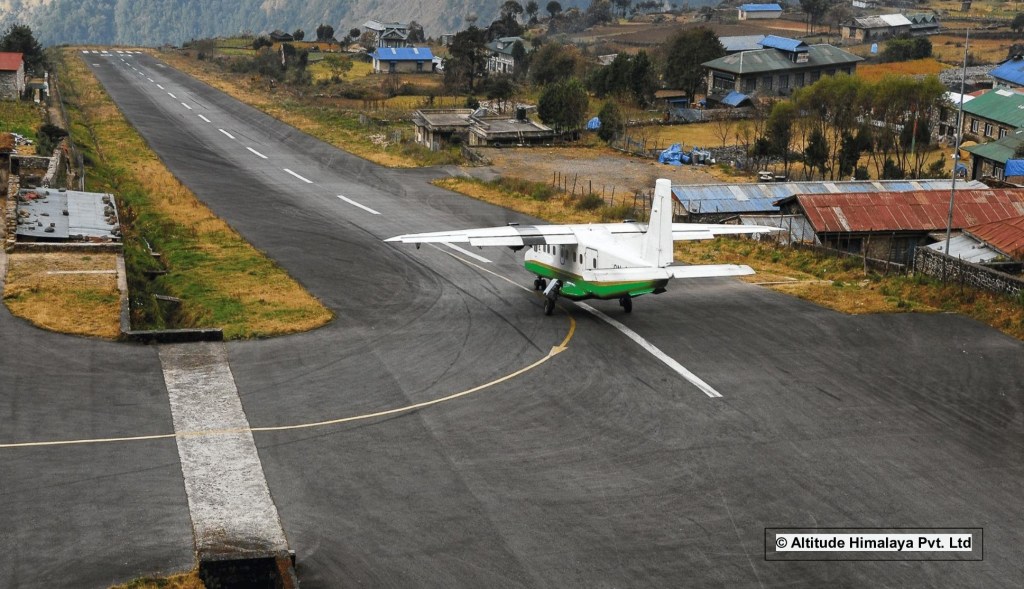
The next day, we flew from Katmandu to Lukla, the small town in the Himalayas that acts as the starting point for many of the popular Base Camp treks. Lukla airport only has one runway and it’s one of the shortest in the world. But it was deliberately built with a 12% gradiant, so planes coming-in land uphill, and get a bit of extra help in stopping, and planes taking-off go downhill, giving them extra speed and lift, which stops them plunging into the ravine below. It sounds a bit dramatic but the truth is that dozens of light aircraft safely take off and land there every day…weather permitting.
We followed one of the most popular routes to Base Camp and then back again to Lukla, and it took us 12 days in total. It was the year after the big earthquake in Nepal, and they were still repairing parts of the route where landslides had occurred. But that was an advantage for us, because fewer people were hiking than usual and we didn’t meet any large groups. My friend and I carried light backpacks, and our guide and sherpa carried everything else, which was humbling for us. Because, while we climbed slowly carrying very little and often out of breath, they climbed easily, with all the extra weight, and then patiently sat and waited until we caught up. We stayed in Tea Houses that had basic toilets but no showers and we ate massive plates of pasta and drank sugary ginger tea every day because our guide insisted, even though we weren’t hungry. He knew that our bodies needed the extra calories, and he was right, we still lost weight. But we also had an amazing time. We saw spectacular scenery; passed dozens of yak teams carrying supplies up the mountain route; we visited beautiful monasteries; and we met open and welcoming people in every village we passed through or stayed.
When we returned to Katmandu, I discovered something that really surprised me. I realised that I didn’t feel anxious there anymore. It was as though spending time in the peaceful expanse of the Himalayas, had somehow helped me to expand inside, and to carry a little of that peace back with me into the noise and chaos of the city. Next, we went to an orphanage that we found on the WorkAway site, which was looking for volunteers. We ended up paying them to work there, which wasn’t quite what we’d planned, but it was worth it because the children we spent the week with were amazing. They were so bright, curious, full of life and excited to have new people working with them. We helped them with their homework; we painted rooms in the orphanage; and we bought them cheap and simple games equipment, because we could see how little they had. And we also took them to nearby wasteland to just run around, be children and play, because their daily lives were so focused on studying, and the orphanage only had a very small outside courtyard…
In the end it was a bittersweet experience, a lot like life itself. We could see how little they had materially, and how limited their lives were, but we could also see how full of positive energy they were, and how openly they shared that energy with us. Those children taught me a great life lesson: that the attitude each of us adopts not only has the power to positively affect our quality of life, but it also has the power to radiate out from us, and to inspire and uplift those we have contact with too.
After Nepal I spent time doing a combination of house-sitting in the UK; voluntary work in Spain; and walking more Caminos. Then my next major trip was to Israel and I went there because, again, I listened to that voice inside me.

One day, while I was working on the Camino, it started telling me that it was time to walk again… but that, this time, I should walk the Camino in reverse. I wasn’t sure why, but by then I’d learned to trust my inner voice, so I went to the West coast of Spain to begin and, the next day, I met a woman who told me that I was walking The Jerusalem Way. When I asked her what it was, she told me it’s the world’s longest pilgrimage route, from Spain to Jerusalem, and that it was created by 3 Austrian men, as a worldwide peace project in 2014, after they’d completed the Camino. When I told her that I wasn’t walking to Jerusalem, but only to the starting point of the Camino in France, she said “But that’s the first stage of the Jerusalem Way!”

Then she reached into her backpack, pulled out a handful of sticky labels…and said “Will you put these up as you go, to help signpost the Way, when the direction isn’t clear?” I said that I would and I did, and…somewhere along that way…my inner voice started saying “You’re walking to Jerusalem”. At first I told myself “Of course I’m not, I’m just putting up these stickers” but, by the time I’d reached the French border, I’d already decided that I would keep walking…
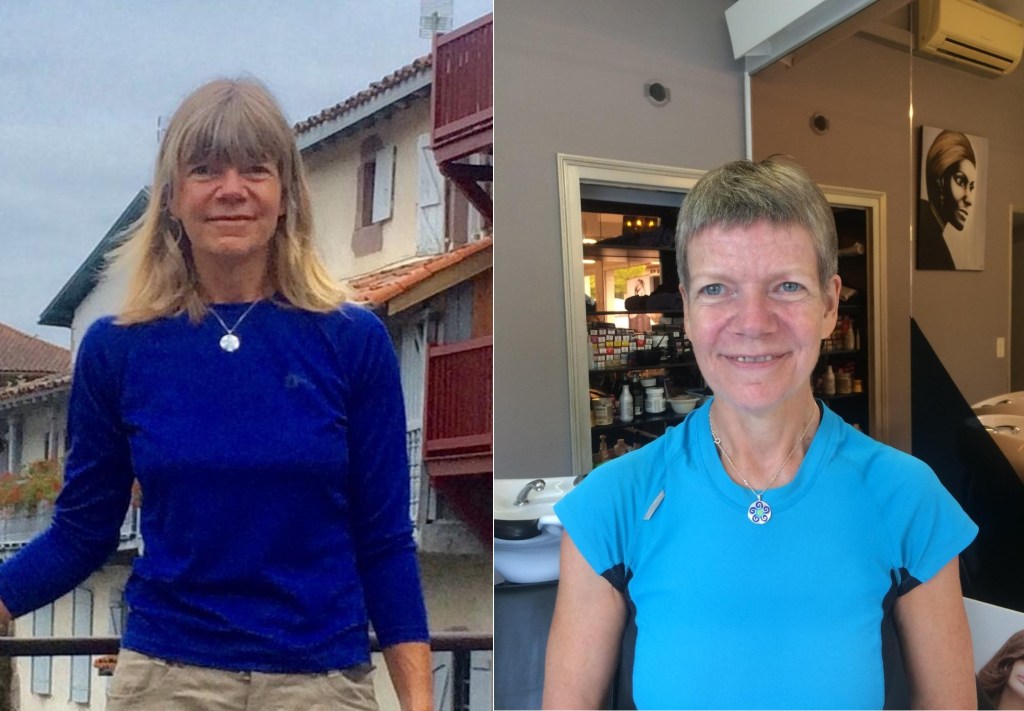
So I had my hair cut short for the unknown journey ahead…and then I carried on walking into France. But I only walked for one week, because by then it had dawned on me that it wouldn’t be a good idea to use up most of the money I had left, walking 8,500 kilometres alone, across 20 countries, when I didn’t even understand why I was doing it. But I could feel, by then, that it was important to me to walk to Jerusalem in some way, and so, in true Camino style, I began to ask myself “How else could I do this?” I searched for an answer on the internet and the answer came straight away…I would go via Cyprus.

You see, Cyprus was a country I’d always wanted to visit because I was born there, although I had no memories of it, because my family left when I was just two years old. And what I was now discovering was that the island was part of a major route for European pilgrims to Jerusalem, in the Middle Ages. So I flew from France to Cyprus, spent a few days there visiting all the places I’d heard my family talking about over the years, to create my own visual memories, and then I flew on to Israel.
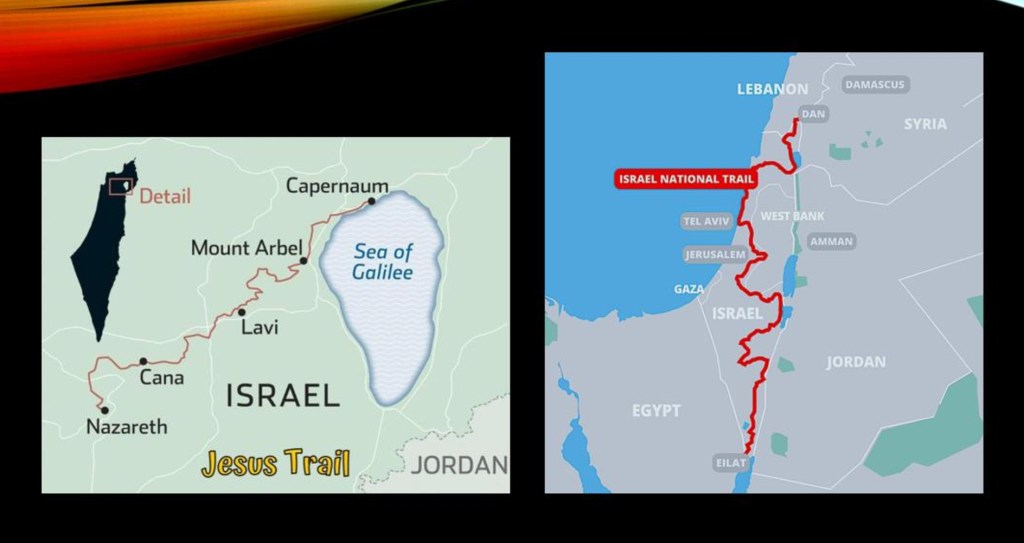
I began walking from Nazareth to Lake Galilee, a route that I discovered is called The Jesus Trail. From Galilee I picked up the Israel National Trail, which runs from the North to the South of the country, and I followed that for most of the way to Jerusalem, which is about half way down. It was quite challenging for me. The temperatures were in the mid-high 30’s and I chose to wear clothing that covered my head, my shoulders, and my knees, because I knew that the trail passed through several Arab towns and villages, and I was walking alone. A lot of the trail also goes through quite remote areas, with few water sources, and it’s a hike that’s really designed for people who camp. I didn’t have a tent, because I didn’t want to carry the extra weight, especially in that heat. But apart from one night, when I couldn’t find another affordable option and decided that I would sleep outside, I always managed to find a hostel or cheap accommodation not far from the Trail.
The atmosphere in Israel generally, especially in places like Nazareth and Jerusalem, did feel tense. And it also felt quite surreal, spending so much time hiking alone through remote areas (just me and my backpack) only to arrive at key sites on foot, to find them bustling with tourists who’d arrived by the coachload before me. But, when I began talking to individual people who were part of those tourist groups, I discovered that, just like on the Camino, everyone had their own personal story and their own special reason for being there…and I met people and pilgrims from all over the world. Throughout all my time in Israel, I met kind and generous people of all faiths, and of no faith. I had long conversations with fellow travellers in the hostels, and simply sharing time with each of them, on a very human level, showed me how vulnerable, how admirable and how similar we all really are. And it taught me that no matter what we believe, and no matter where we’re from, if two people really want to connect with each other, they will always find a way.
After two months in Israel, I returned to the UK to celebrate Christmas with my family and friends there, and then I began to think about how I could spend the winter months before going back to the Camino and Spain.
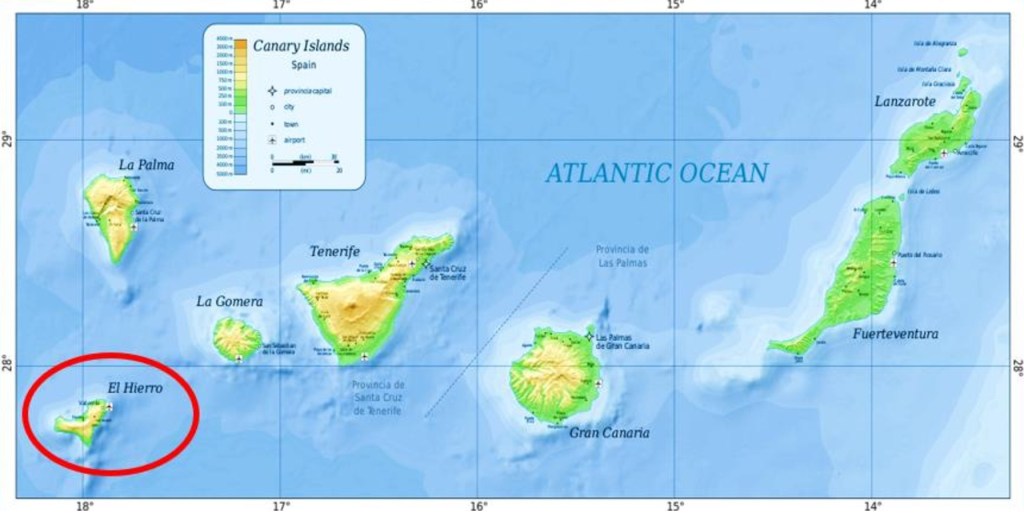
Again, through the WorkAway.info site, I found a family living on the island of El Hierro in the Canary Islands, who were looking for a volunteer to help their teenage daughters with their English. I planned to be there for just 6 weeks, and that’s what we agreed on. But when I arrived, the father told me that the family had hosted 25 different volunteers over the previous years and that 14 of them now lived on the island because they’d decided to settle there. And I could see why. El Hierro is the western-most island in the Canaries and it’s tiny. It measures just 30kms by 20kms so, wherever you are, you can see the Atlantic Ocean all around you, and it’s always changing and it’s always beautiful.
In the last couple of years, the island has become known as the place where thousands of migrants from Africa have landed in small boats, seeking a new life. But before that, El Hierro was better known for its conservation reputation. It was declared a Biosphere by UNESCO in 2000 because, even though it’s so small, it has an incredibly diverse landscape and ecosystem, both on land and in the sea that surrounds it. Each Summer it attracts hikers and divers from around the world, but it remains unspoilt, because the islanders have limited tourism development and they’ve invested more in sustainable energy and biodiversity management instead. It’s an active volcanic island, which means that when you’re hiking, you often hear mini rockfalls around you, but that just gives it a real sense of somewhere that’s bursting with nature and with life, in all its forms. The way of life there for residents is very simple and almost feels like it’s been caught in a time-warp, because there are no familiar global brands or chain stores on El Hierro.
And after 6 weeks there, I also decided that I would settle on the island for a while. More than anything, to give myself time to work out if the Camino and Spain were still so important to me, 4 years after first discovering them, or if they’d just been the gateway to my new way of life. So, I applied for temporary Spanish residency, I found the cheapest place that I could to rent, and I spent the rest of the year there making new friends; reading; writing; studying Spanish; and hiking the beautiful routes that criss-cross the island…
At the end of the year, when it was time for me to leave, I was certain that I wanted to return to the Camino. Because, with so much time to reflect, I’d realised that the thing that gives me the most sense of fulfilment in life, is doing something I genuinely love doing and, when I do it, seeing that it’s been helpful to someone else. And that’s what I see happening, time and again, in my interactions with other pilgrims on the Camino. When I can see that I’ve helped someone, just by listening to what they’re going through and by sharing a little of what I’ve learned through my experience, I feel that my life has value. I understand that, for many people, that doesn’t sound much like a life purpose. But I’ve discovered that it’s enough for me. The other thing, that spending so much time close to unspoilt nature on El Hierro helped me to realise, was that I felt an overwhelming sense of gratitude, both to the Camino and to God, for giving me this new perspective on life and on what has real value. And because of that, I decided to walk my original Camino route one more time, not in search of anything this time, but just as a way of physically giving thanks for the life inside me.
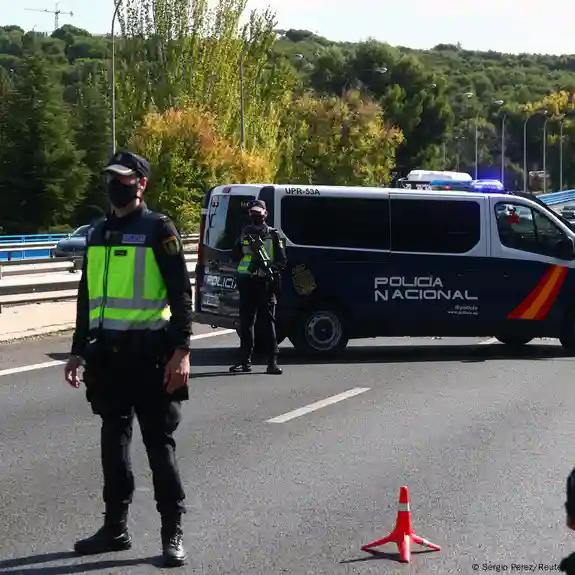
So on the 12th of March 2020, I started that Camino of gratitude…just two days before Spain announced a total lock-down due to the Coronavirus outbreak…and it took me completely by surprise. Because one of the major decisions I made after my first Camino was to stop following the news and all the doom-laden speculation that always surrounds it. I’d heard of Covid, of course, but I had no idea how serious the outbreak was, or how quickly it was escalating. When the Lockdown was announced, Spanish authorities began urging all foreigners and all pilgrims on the Camino to return home as quickly as possible. But I felt, in my heart, that I couldn’t, because it was my ‘Camino of Gratitude’ and my inner voice was telling me it was important to stay. So I continued walking for two days more, until I ended up in the city of Logroño, with the plan that I would wait out the two-week lockdown there and then continue on to Santiago. But then an amazing series of coincidences started to unfold…
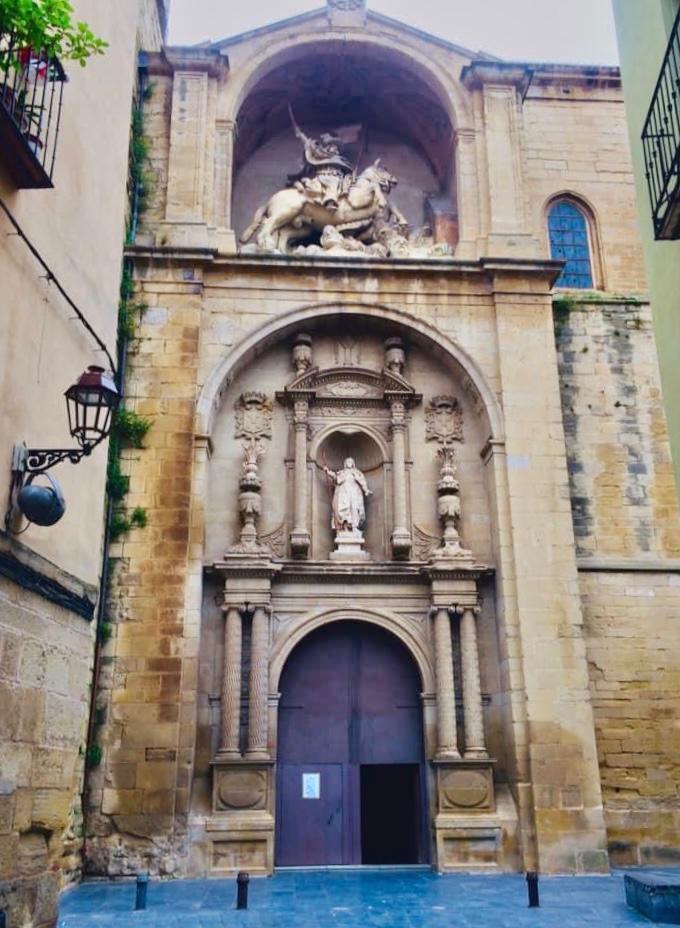
Spain extended the lockdown, I found myself passing the only church in the city that was still open, and I found out that it was the church of Santiago. And there, I met a remarkable man called José Ignacio Díaz. He was the parish priest at that time, and meeting him shaped the course of my life for the next 5 years. He was someone who was passionate about the Camino and about pilgrims. He was passionate about nature, and about how God speaks to each one of us through nature. And he was passionate about helping people to understand what calls pilgrims to walk the Camino, in search of something more. José Ignacio gave me a refuge during the months of the Covid lockdown; a home for the two years after I completed my Camino; and a role and a purpose that was perfect for me at the time.

I started to work as a full-time volunteer Hospitalera in the Pilgrim Hostel that was attached to the church. And through that work, I met countless pilgrims who were looking for someone who could listen to their very personal stories with compassion, and who could understand where they were coming from, and what they were going through. And that experience taught me what I now believe absolutely. When we really listen to the deepest part of ourselves, and do what we can to start living in a way that feels more true to our real selves, people come into our lives to help us in ways we could never have imagined. And people also come into our lives who we seem able to help…just by being our true selves.
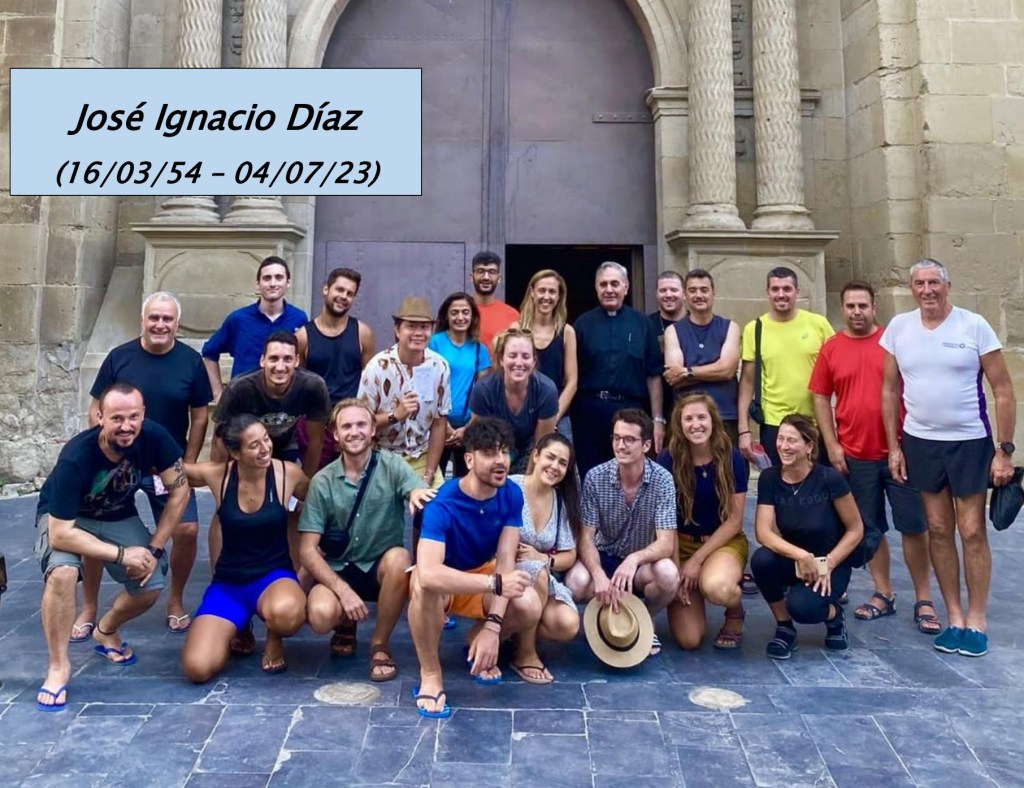
Sadly, my friend José Ignacio died in 2023, just 3 years after I met him, but I have no doubt that the reason I needed to walk that Camino in 2020 was to meet him and to know him. We talked a lot during my time living at the Hostel; I learned a great deal from him; and we became good friends. Because he always showed respect for the ways that my beliefs differed from his own, and he was never afraid to talk openly with me, about his own personal experiences and about how they’d shaped him as a priest and as a man. One thing he said in particular left a lasting impression on me, and I think it always will. He said:
“Never try to win an argument or convince anyone about something you really believe in. Because if you do, you’ll just be talking to that person’s mind. But if you change the way you live your life in line with what you believe, you’ll be the greatest example to others, and that will speak directly to their hearts. Once our mind has been changed, it can be changed again. But once our heart has been changed, it stays changed forever.”
– José Ignacio Díaz
…and I agree.
Thank you for listening to my story.
🙏😊🌸


 La Casa de Paz