
Twenty years ago, in July 2006, the parish of Santiago El Real opened the doors of its parish house for the first time to welcome pilgrims passing through the town on their way to Santiago de Compostela. It was the realisation of a dream held by the parish priest at the time, José Ignacio Díaz: to put the true Christian message of hospitality into practice in a meaningful and visible way, for a parish and a church that bear the name of the saint after whom the Camino is named.
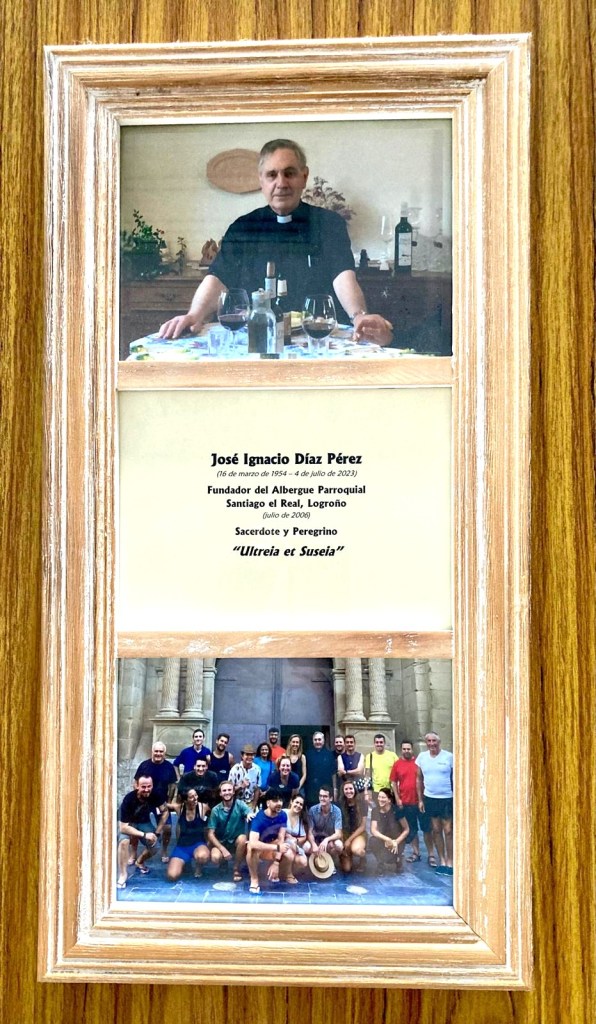
José Ignacio was a passionate advocate and promoter of the Camino, as well as of the ways in which it helps pilgrims to find their own path towards a personal and meaningful relationship with God. He understood that all true and lasting wisdom is acquired through personal experience, and that the Camino – by bringing together, as it does, people from every nation, every culture and every belief system in the world, just as the Gospel tells us will happen – plays an important role in helping us discover that true love for ourselves and for others is found and lived out in communion with God and with one another.
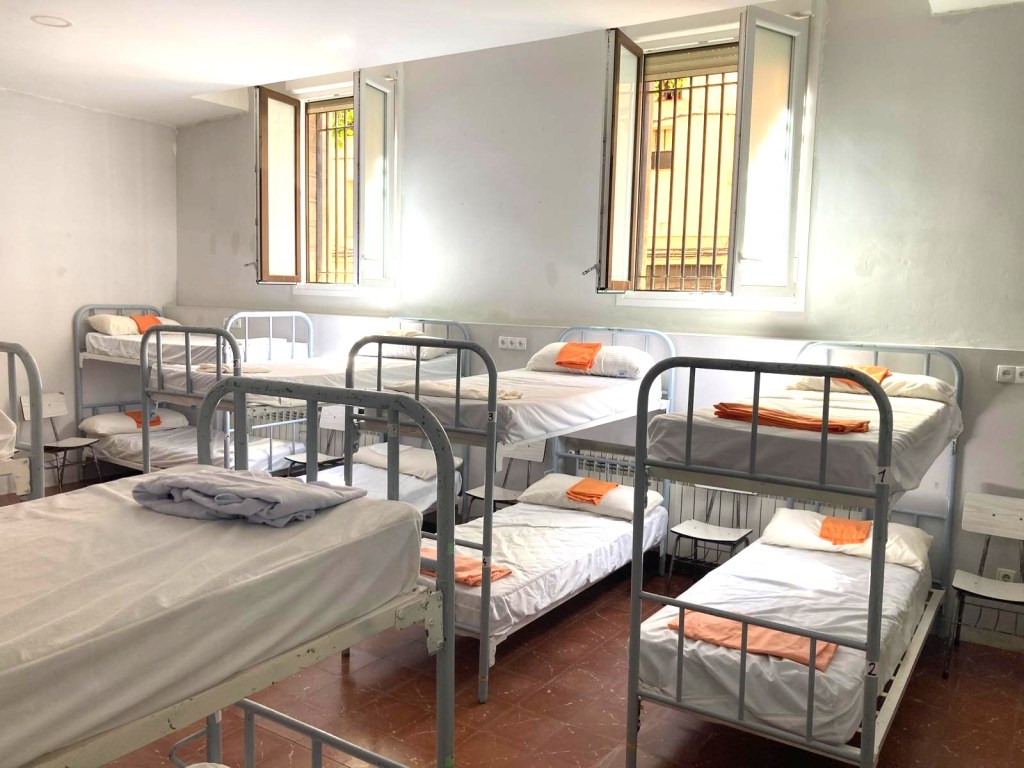
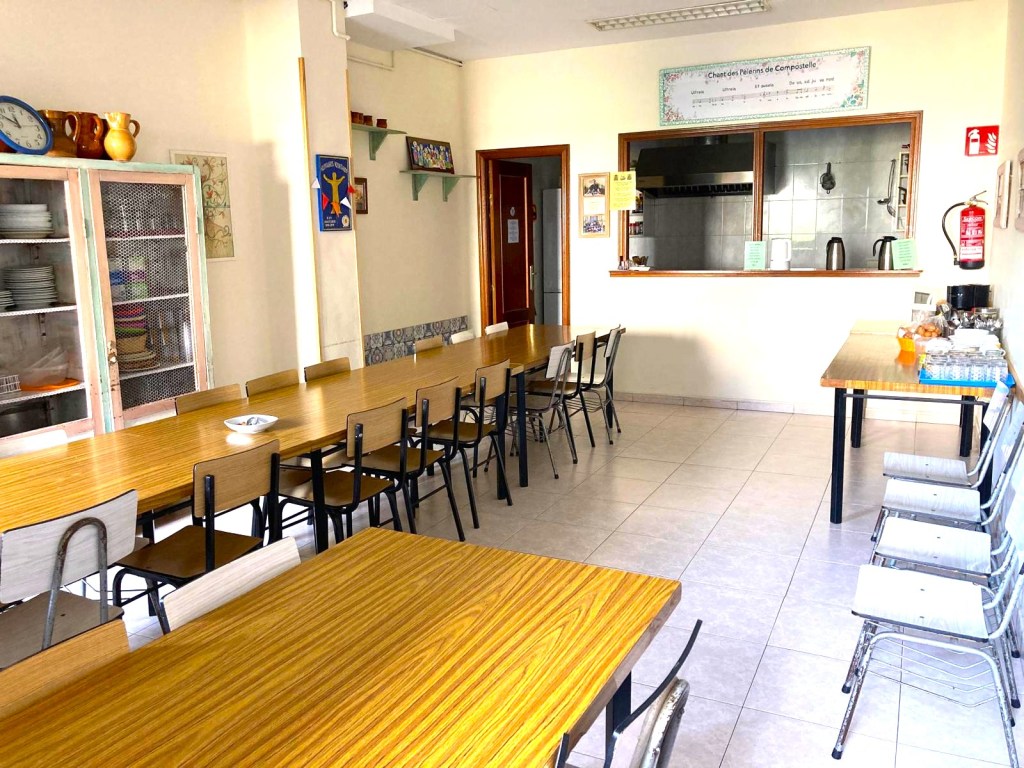
The dream of the hostel became a reality thanks to the help and support of many friends and volunteers, who transformed part of the parish house into dormitories, bathrooms, a large kitchen and a dining room. And the tradition of offering a communal dinner and breakfast, as well as a place to spend the night – all in exchange for a donation – reflected the spirit of Christian hospitality that was the driving force behind that dream.
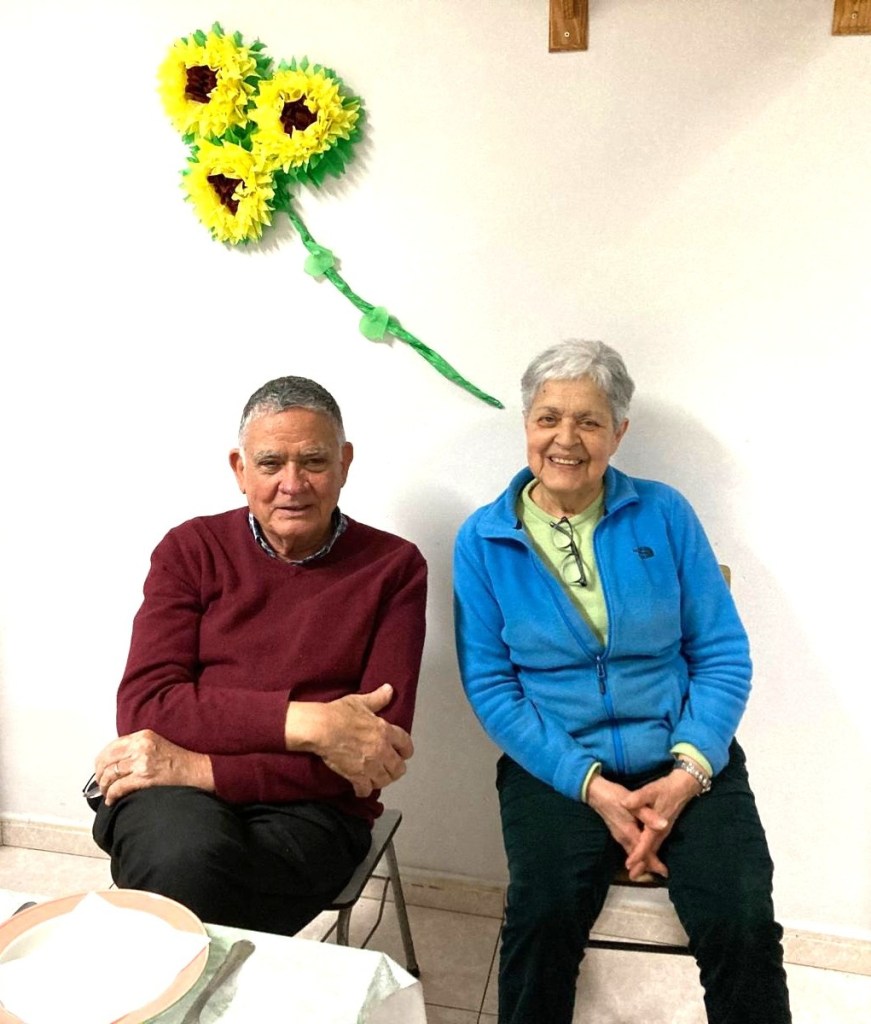
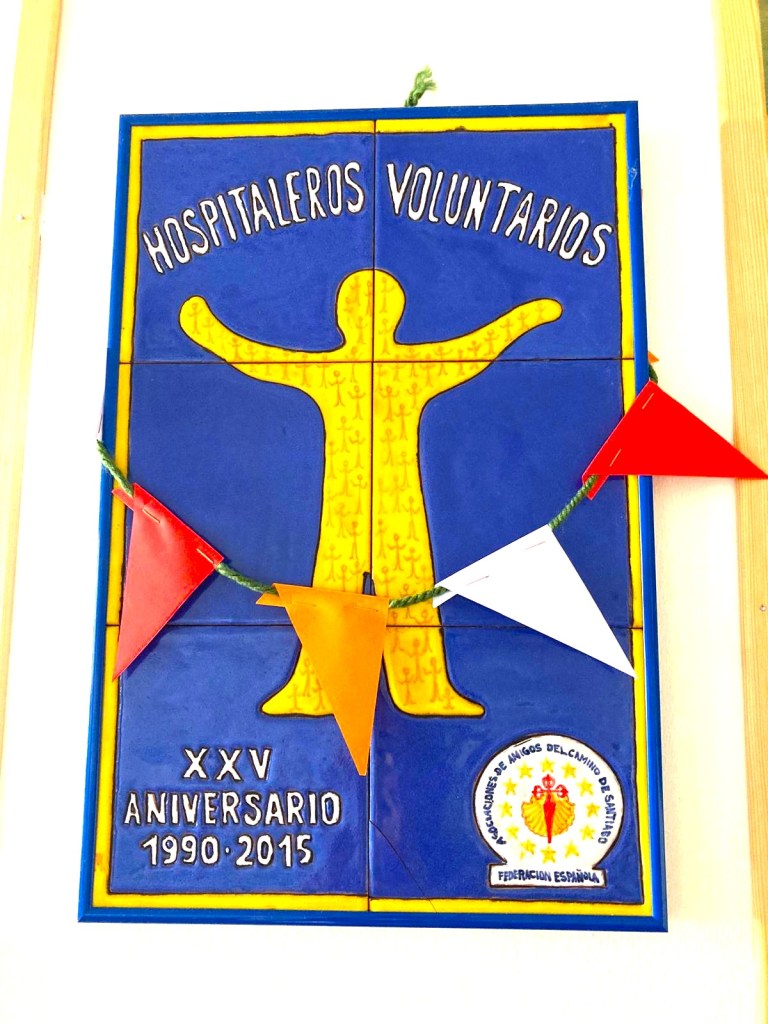
It began as a summer hostel, open from June until the end of August, a period when the number of pilgrims passing through Logroño traditionally peaks. From the very beginning, it has relied on volunteers from the Association of Volunteer Hospitaleros, without whose tireless, constant and invaluable help and support the hostel could not operate.
Three years later, in 2009, it became a year-round haven for pilgrims, as resident hosts, Roberto and Elsa, took on the responsibility of welcoming and looking after passing pilgrims during the nine months from September to May.

As with everything in life, times change, and the Camino has changed too. Its popularity continues to grow year on year (last year, more than 500,000 pilgrims arrived in Santiago de Compostela) and the number of pilgrims passing through Logroño during spring and autumn has also increased year on year. The Association of Volunteer Hospitaleros now provides volunteers all year round, and, in addition, seminarians from the Bidasoa seminary, near Pamplona, also come to lend a hand during the summer months. We have a new parish priest, Juan Pablo López Mendía, who shares the same commitment to the original vision that gave rise to the hostel and who actively collaborates with the hostel volunteers, the seminarians and the pilgrims who spend time in the parish, on their way to Santiago de Compostela.

To give you an idea of what attracts and motivates these volunteers to devote weeks of their free time to serving the Camino, the parish and the hostel, we have asked the team currently working with us to share a little of their own story, which they have kindly agreed to do. We hope you enjoy reading them…
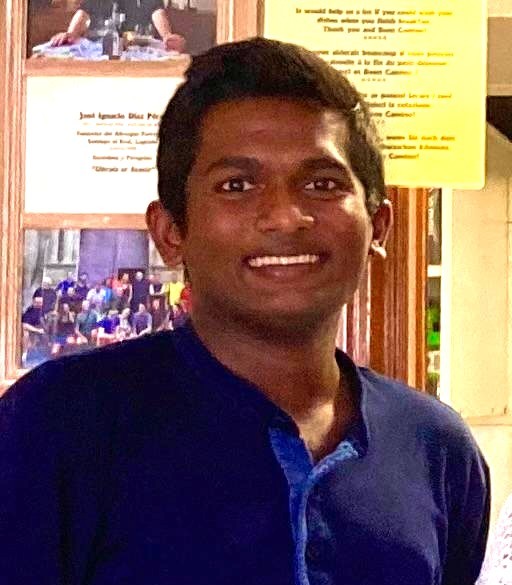
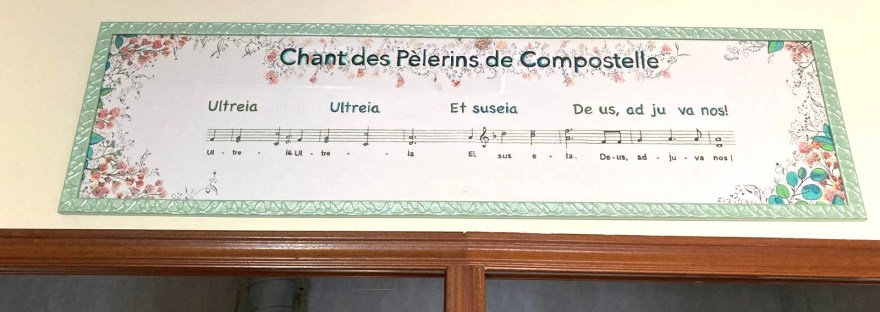
Avishka: “What I have enjoyed most about my experience of service here in Logroño is the joy and the smiles we encounter every day. That joy is a true gift that the Camino de Santiago offers to those who walk it and also to those of us whose mission it is to welcome them. During this time, I have discovered the beautiful unity that exists between pilgrims and hostel volunteers. Although they come from every continent, we share the same spirit of brotherhood. It was a great surprise for me to experience how this hostel welcomes pilgrims with such love and simplicity. I am convinced that this love is the force that encourages pilgrims to continue on their journey and hostel volunteers to keep serving with generosity. Everything is for God and for the glory of God. As a seminarian from Sri Lanka, this service has been a great source of human, cultural and spiritual enrichment. The Church has enabled me to meet people from many different languages, cultures and countries. Although pilgrims set out from very different parts of the world, they all walk towards the same destination: the place the Lord has chosen and where each one seeks to encounter Him. The Camino has taught me the beauty of diversity, the value of freedom and the truth that, in the end, we all wish to reach the same point: the encounter with true joy, which is Christ. “Ultreia, ultreia, et suseia, Deus adiuvanos!”

Digger: “The reason I decided to become an hospitalero has no doubt been stated by many before me but that does not lessen its validity. I really did want to put something back into a system that had been of considerable benefit to me in the past . The experience has not weakened the logic of this. On the contrary, I feel even more strongly now, a personal sense of balance because of my participation. Personal faith was not a driving factor, I just wanted to help others and I am very happy to have done so. What I liked most about being a hospitalero was working with some of the team members toward a common goal, always for the benefit of the pilgrims. Tasks vary daily but the theme remains constant: Do this work so that others can just walk. There are also hidden benefits. Who would have guessed that cleaning toilets together is a fairly effective bonding exercise? I also enjoyed having a little more time than usual to talk with and learn from people of vastly different backgrounds. It’s also a bonus that my Spanish has improved! There is no equivalent to the camino in Australia. Some members of various Friends of the Camino groups will argue that point but in reality there simply is not anything like this DownUnder, despite the claims of some commercial, self interested groups. You have to come here to be a pilgrim. It’s expensive to get here, the journey to the start point can be a trial in itself and it’s a long way home when you’re tired and homesick. However, it’s always worth it! The rewards are difficult to quantify but nonetheless meaningful and worthy..”
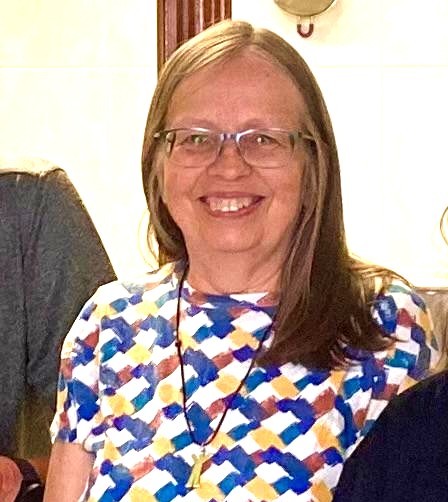
Anne: “The church of Santiago el Real in Logroño is where I started my first Camino about 10 years ago. Arriving from Madrid on 25th July, I didn’t realise that I was starting on St James day until I went to mass in the church and the procession afterwards through the streets. As an American from New York, I found the kindness and generosity of the people of Logroño in the celebrations that day wonderful. The singing in the parroquial albergue that night of “ultreia et suseia”, led by the Parish Priest, stayed in my mind and helped sustain me all the way to Santiago de Compostela.
In the summer of 2022, I was fortunate to be placed here in the parish hostel of Logroño as a hospitalera. I felt very grateful to be able to take care of pilgrims on the Camino in such a beautiful and historic place, to attend mass regularly and to have had the guidance of Padre José Ignacio in welcoming everyone. The time for prayer and reflection in the church, after the shared dinner, was appreciated very much by many of us pilgrims and hospitaleros. Overall, my experience serving as a hospitalera has really helped to quiet my mind, open my heart and deepen my faith. I am very happy to be volunteering here again this summer with a great team of people.”
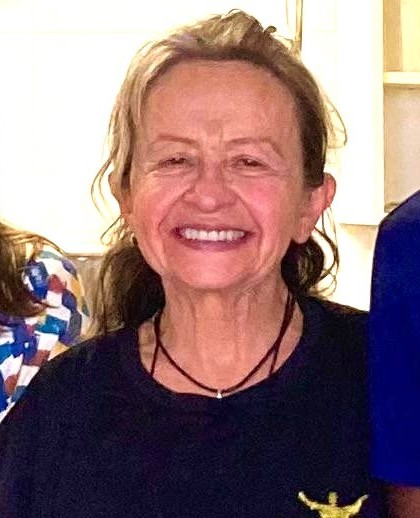
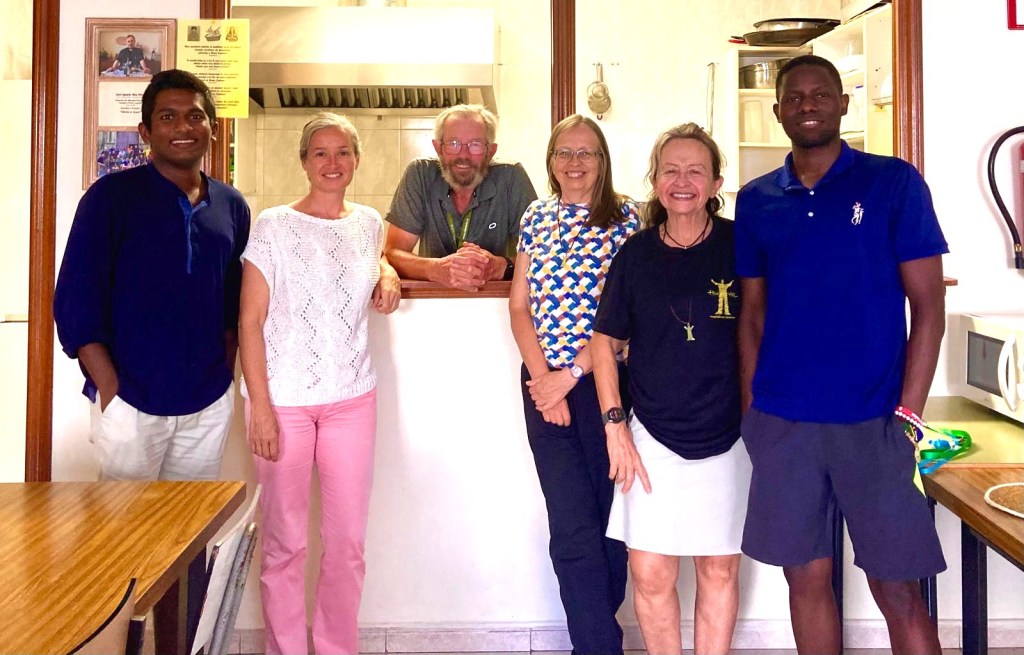
Julia: “It’s all part of my journey, my life, my faith, my Path… Walking is a passion of mine! It’s a connection with my physical self, with the place where I find myself, with my spirituality, with the Divine! I’ve walked along many different paths – short ones, long ones and treks. I feel as though I’m always on the path. I was born in Argentina, where I lived until I was 18, in a family that lived in harmony with Christian virtues. At that age, I went to live in Brazil; 52 years have now passed. I went on several pilgrimages in my home country and, since the year 2000, walking the Camino de Santiago had become a burning desire of mine. It wasn’t until 2016 that I managed to complete my first Camino, but this year I will be undertaking my eighth: the Camino de San Salvador. Ever since my first Camino, I’d been nurturing the desire to experience this as a volunteer hospitalera. In 2025, I completed the preparatory course in Brazil and, in August of that same year, I was able to undertake the role in Grañón. I am now a hospitalera at the Santiago El Real Hostel, alongside two female hospitaleras and one male hospitalero, and we are fortunate to have the wonderful support of two seminarians, which is a truly rewarding experience. We are a multicultural team representing all five continents: Europe, Asia, Africa, the Americas and Oceania. Despite all these differences, there is an atmosphere of cooperation and understanding; we are united by our common goal, which is to welcome pilgrims and provide them with a restful and restorative break along the Way, giving the very best of ourselves. I am grateful for the opportunity to serve! Because working as a volunteer host is another way of walking the Camino. I feel the Camino flowing through me. Every day, pilgrims come and go, and I remain here. And that, too, is the Camino de Santiago!”

Robert: “My ministry here at the parish of Santiago el Real in Logroño has been a rewarding one, with the wonderful experience of getting to know the high altarpiece, which depicts the Way of St James. For it is not just an altarpiece, but the life of St James itself. Many pilgrims who come here want to know more about the altarpiece, so we have to explain it to them to help them get to know St James better – he is, after all, the one they are heading towards. Thus, my life here at the hostel as a volunteer has been a journey of faith, just as Mother Teresa of Calcutta said: ‘We can achieve holiness by doing small things’. That is why, for me, doing small tasks at this hostel – such as cleaning the rooms, changing the bed linen, cooking or drying the washing-up – forms part of the path to holiness, because I do them for others. Furthermore, in my daily life with the pilgrims, I really enjoyed the presence of people from different places speaking different languages; this reminded me of the Book of the Acts of the Apostles: ‘When the day of Pentecost came… they were all filled with the Holy Spirit and began to speak in other tongues, as the Spirit enabled them to express themselves’. This, therefore, signified the presence of the Holy Spirit in everyone, for it is the same Spirit who speaks in prayer, but in different languages. Consequently, based on what I have learnt here in the parish, I would also like to put this into practice in my diocese – that is, showing hospitality and charity in welcoming pilgrims, and offering them detailed explanations. Above all, this Way of St James is a journey to bring the holiness that God bestowed upon his apostle St James in Compostela; we must therefore place it in our hearts to transform our lives.”


